Government Websites Implement Analytics Tools to Track Use of Public Services

In its latest push towards AI-ification, the U.S. Government, alongside Airbnb co-founder, Joe Gebbia, has opted to install PostHog analytics on vital government websites, including those related to healthcare and voter registration.
Simply put, no third-party should know someone visited a government website, and it is the government's responsibility to ensure scrutiny-free access to online resources, especially those connected to sensitive public services.
You visit a government website to register to vote, apply for veterans' benefits, look up health insurance because the government site is the only place you can do these things. And while you do them, a private company's analytics tool is watching.
How the tracking works
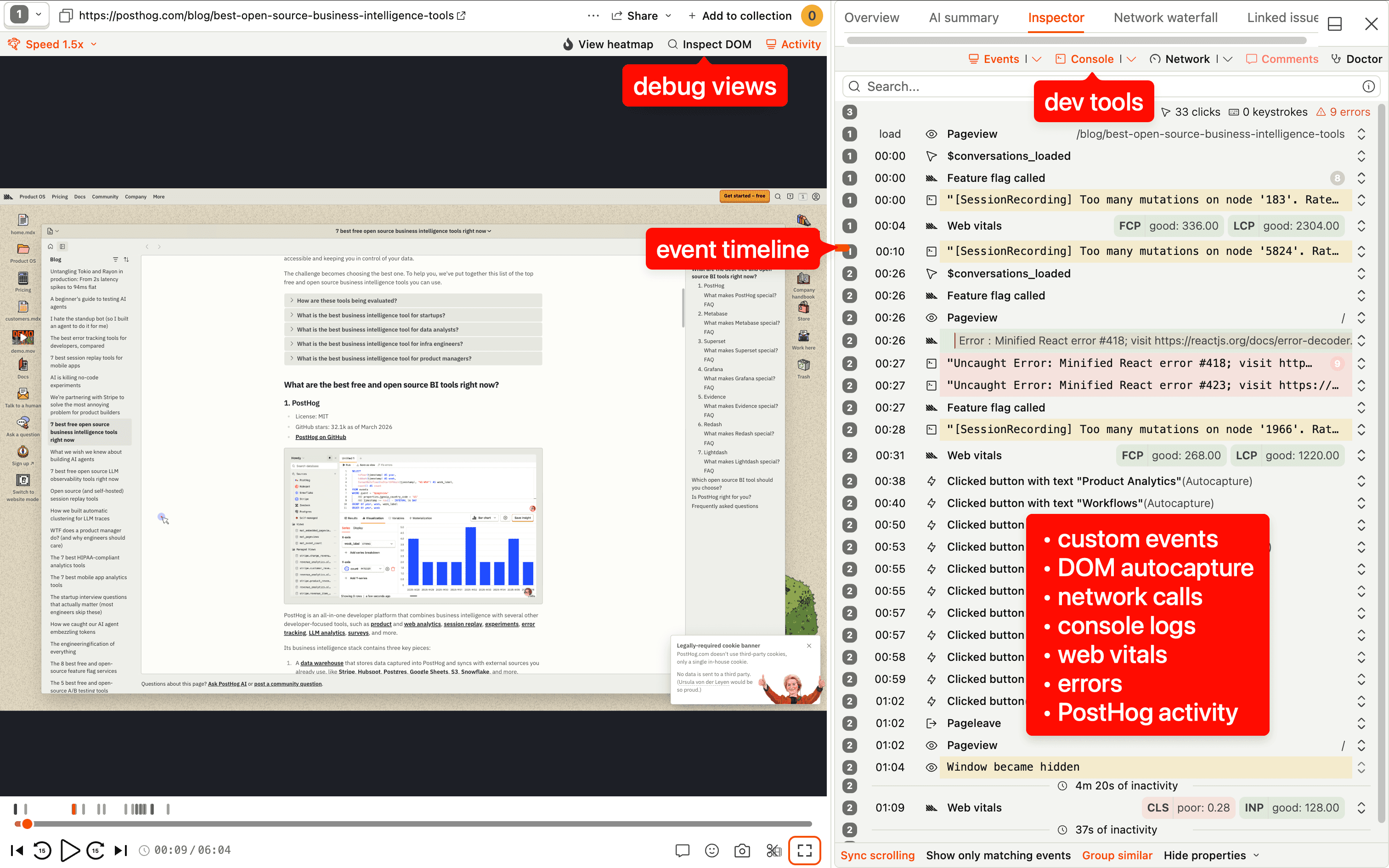
PostHog provides session recording, event tracking, and analytics dashboards for companies that want to understand how people use their products.
PostHog's session recordings are a replay of a user's visit, it's essentially a video of your session (on that site). Princeton researchers who first documented the technology in 2017 wrote that watching such a recording was as if someone is looking over your shoulder.
PostHog itself is open source, it's not evil software, the concern is where it is being deployed.
What The Guardian found
The Guardian reported on June 28, 2026 that the National Design Studio, a White House office created by executive order on August 21, 2025, had built some of the most sensitive federal websites in the country. The studio is led by Gebbia, the Airbnb co-founder, and staffed largely by those who worked at the (now defunct) Department of Government Efficiency. Its stated job is to "redesign how Americans experience their government," whatever that means.
The Guardian found the NDS built and now operates four public federal websites: ndstudio.gov, trumprx.gov, realfood.gov, and trumpaccounts.gov. These connect people to prescription drug pricing, children's savings accounts, and food security.
The Studio also built White House controlled versions of services Congress assigned to other agencies, including a passport application portal and a copy of vote.gov, the federal voter registration site that belongs by law to the independent, bipartisan Election Assistance Commission.
The Guardian's analysis of the underlying source code found that at least two of the studio's sites installed PostHog. On Trump Accounts and TrumpRx, session recording was built into the page code and held inactive only by a single setting inside PostHog's dashboard. The studio could turn it on at any time, on either site, without changing the underlying website code.
None of the four sites carry the public privacy filings federal privacy law requires, under laws including the Privacy Act of 1974 and the E-Government Act of 2002
On ndstudio.gov, alongside PostHog, ran a second piece of tracking software. It was roughly 539 lines of custom JavaScript, called AutoMonitor in the code. It appears to record clicks, form entries, and navigation, assign each visitor a session identifier, and forward the captured data to an address that does not appear anywhere on the public internet.
The tracking was configured to route analytics through an address on the federal website itself, rather than through PostHog's own servers. To a browser, and to an ad blocker, the data looks like it is going back to the government site, but it is then forwarded to PostHog. That is a technique used to slip past blockers by disguising where the data is really going, and is not something I want or expect to find on a federal health website.
The recordings were not anonymized and IP addresses were not stripped.
None of the four sites carry the public privacy filings federal privacy law requires, under laws including the Privacy Act of 1974 and the E-Government Act of 2002. None of the studio's spending or its arrangements with outside vendors appears in USAspending, the federal contracting database. The Guardian sent detailed questions to the White House on June 4. By June 17, the tracking software had been removed. White House spokesperson Liz Huston responded that all National Design Studio personnel comply with all legal requirements in their important work.
Removal after inquiry is not an admission of guilt, but it doesn't excuse the fact that the tracking was there, and that someone inside the NDS decided to take it down after The Guardian started inquiring.
Why removal does not settle it
Who would know if they turned it back on? Unless you were looking, no one. And beyond that, if analytics are routed through the government site itself, a visitor's own privacy tools cannot see it, and cannot block it.
Not all analytics are the same
The federal Digital Analytics Program, for example, tracks traffic, downtime, and errors across .gov sites. It is run by the General Services Administration. The data flows into a governmentwide Google Analytics account, and the public can see a window into it at analytics.usa.gov. The program says it does not track individuals, it anonymizes IP addresses, agencies are forbidden to pass personally identifiable information into it, and no data is shared with Google's corporate advertising partners.
PostHog session recording is broader than DAP pageviews, it is a record of behavior. Put that on a page where someone types a medication name, a date of birth, or an address, and it becomes a record of a private act, held by a private company, with no public filing to say where it goes or who has access to it.
Colorado
The Colorado Governor's Office, for example, has multiple analytics pipelines installed, some added by hand, some by a third party firm, plus Siteimprove. Colorado's privacy policy says, in plain language, that the state collects your name, address, phone number, photo, job title, email, and recordings of your interactions with its website.
Denver's own privacy page makes the third party part explicit. It says the city uses Siteimprove and Google Analytics, and that its third party analytics providers receive limited technical information about your visit, including your IP address. Limited is doing a lot of work in that sentence. Limited still means a private company gets to see that you were there, when, and what you looked at.
A person visiting a government website is not shopping for shoes, testing a startup app, or browsing recreationally. They may be using it for healthcare, looking for a new job, or interacting with federal agents. They may be registering to vote, applying for benefits, or checking a health plan.
When a third party can see that visit, it makes private acts visible to people who have no right to see them. It chills the use of public services that people are entitled to use privately. A person who worries, correctly or not, that a visit to a benefits page or a voter registration page will be recorded and replayed is a person who may not make that visit at all. That is the harm. It is not a future harm, it is happening right now.
What removing trackers does not fix
Removing third party trackers does not solve everything. The government needs to collects data when you use its services, it also needs to better control who gets to see it, and what they do with it.
If a government site is going to record sessions, that choice should be public and opt-outable, not discovered in source code. It should come with a privacy impact assessment that names the tool, says what it captures, says whether IP addresses are stripped, says where the data is stored, and says who can query it. It should come with a System of Records Notice in the Federal Register where the law requires one. It should come with a contract in USAspending. And it should come with no session recording on pages where people type health information, benefits information, or voter information.
Public services should not come with a private audience. That is not a lot to ask.


Comments ()